
Sweet Alchemy The Hidden Craft Behind the Soul of French Patisserie
Unveiling the Techniques, Traditions, and Artistry That Define France’s Most Exquisite Desserts
The Art of Precision and Patience
Behind the glass counters of a French patisserie lies a universe of perfection. Every éclair, tart, and macaron represents hours of skill, patience, and a philosophy that treats baking as art rather than routine. French patisserie, born from centuries of culinary refinement, has always been a reflection of discipline and creativity. It is not about excess, but about harmony. Each creation must achieve a delicate balance between texture, sweetness, and aesthetic beauty. To understand its secrets is to step into a world where science meets poetry, where temperature, timing, and touch define success.
The mastery of patisserie begins with precision. Unlike rustic baking, where instinct often guides the process, French pastry requires exact measurements and controlled conditions. Butter must be chilled to a precise degree, eggs whisked to the perfect volume, and sugar caramelized at the right temperature. The pastry chef’s tools are not only mixers and molds but also scales and thermometers. Yet, beyond technique, there is intuition, the kind of knowledge that only years of practice can refine. A true pâtissier knows when dough feels alive, when a custard has reached its silkiness, or when the scent of caramel signals perfection.
The Golden Age of French Pastry
The origins of French patisserie date back to the royal courts of the seventeenth century. Under the reign of Louis XIV, sugar became a symbol of sophistication and artistry. Confectioners, once mere cooks, rose to prominence as culinary artisans. The kitchens of Versailles buzzed with invention, producing delicacies that blended elegance with extravagance. Creams, glazes, and puff pastry began to define the language of luxury. By the time of Marie Antoinette, desserts had become more than nourishment, they were performance, fashion, and status.
The evolution of patisserie continued through the centuries, guided by masters who shaped its foundations. Marie-Antoine Carême, often called the architect of pastry, elevated desserts into monumental sculptures. He perfected the art of pâte feuilletée, the flaky foundation of croissants and mille-feuille. Later, Auguste Escoffier simplified and codified techniques, making French pastry accessible to a new generation of chefs. These figures did not merely bake, they built an empire of flavor that continues to inspire modern pastry chefs around the world.
Ingredients as Instruments of Expression
Every pastry begins with ingredients that are deceptively simple: flour, sugar, eggs, butter, and milk. Yet within these humble elements lies infinite possibility. French patisserie transforms the ordinary into the extraordinary by manipulating temperature, texture, and time. The choice of butter, for example, determines the soul of a croissant. French butter, with its higher fat content and cultured flavor, gives layers a distinct aroma and crispness. Flour selection dictates elasticity and crumb, while eggs provide both structure and richness. Nothing is random; each ingredient must serve a purpose.
Sugar, the heart of sweetness, is treated as an artist treats color. It can be melted, whipped, spun, or caramelized, each state revealing a different shade of complexity. Vanilla from Madagascar, chocolate from Côte d’Ivoire, and hazelnuts from Piedmont enrich the palette of the pâtissier. Fresh fruit is used not as decoration but as punctuation, adding acidity to balance sweetness. The art lies in restraint, in knowing when to stop. A perfect pastry never overwhelms, it invites, seduces, and lingers like perfume on the palate.
The Architecture of Pastry
The structure of a French pastry mirrors that of architecture. Every component, from the base to the topping, must support the whole. Consider the mille-feuille, composed of layers of puff pastry and cream that must remain crisp and tender in perfect proportion. Or the Paris-Brest, a choux pastry ring filled with praline cream, inspired by a famous cycling race. Its circular form symbolizes motion, yet its flavor is pure stillness, nutty, velvety, and balanced. This architectural precision is not limited to complexity. Even the simplest tart requires geometry, symmetry, and discipline to appear effortless.
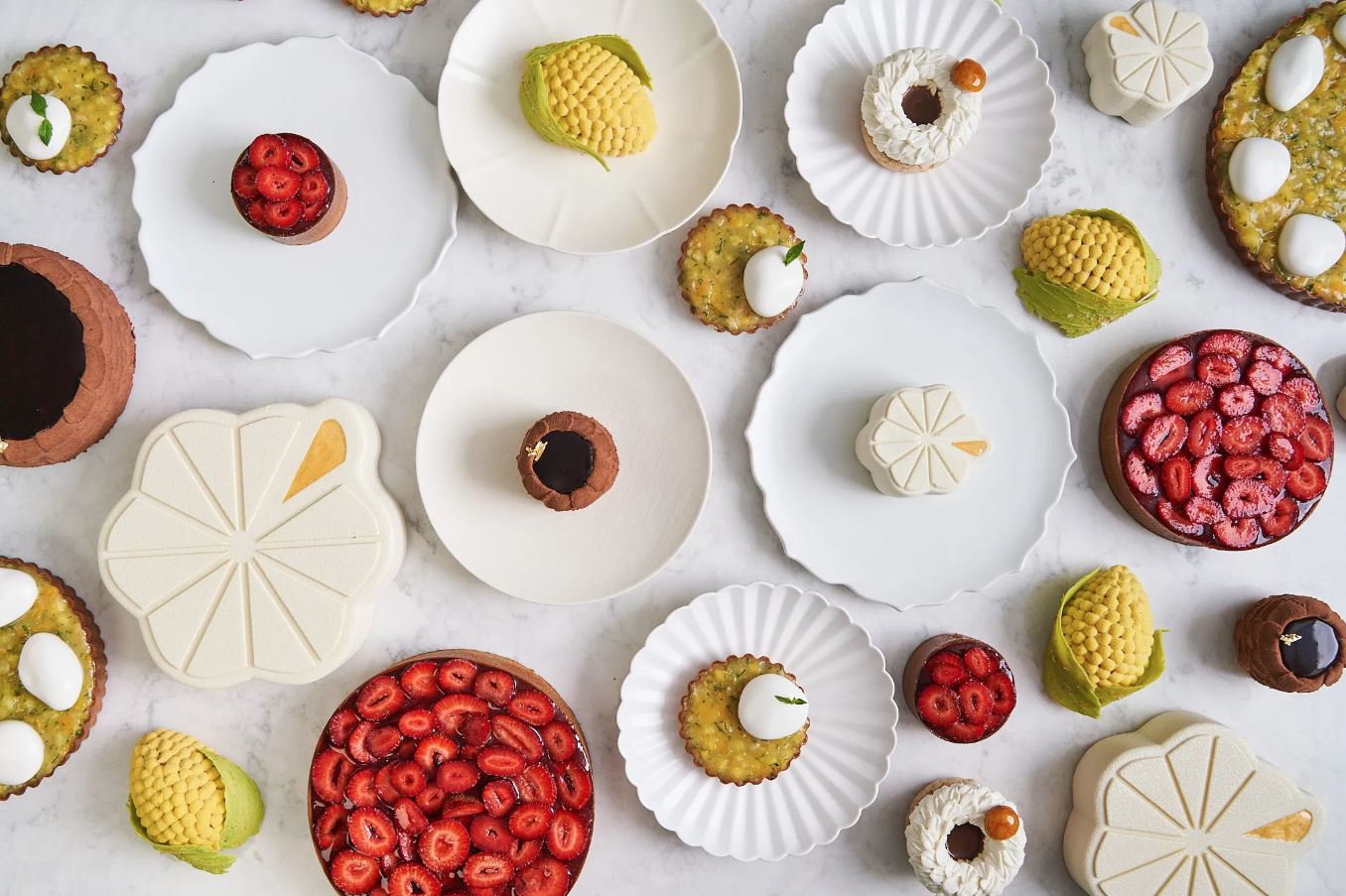
The visual harmony of patisserie reflects its French heritage. In Parisian shops, pastries are displayed like jewels, each one positioned to highlight its shape and color. The aesthetics are as vital as taste, for the first bite begins with the eyes. Glazes must shine like mirrors, edges must be clean, and layers must reveal perfection when sliced. This devotion to form transforms baking into sculpture. To master it, a pastry chef must think like an architect, sculptor, and painter all at once, building emotion through layers of flavor and form.
Techniques That Define the Craft
French pastry techniques are both ancient and innovative, combining traditional craftsmanship with scientific understanding. Mastery begins with the basic doughs that serve as the foundation for countless creations. Pâte brisée, the shortcrust used for tarts, balances tenderness and stability. Pâte sablée, rich and crumbly, is used for delicate desserts where texture is key. Pâte à choux, the airy dough behind éclairs and profiteroles, relies on steam expansion rather than yeast. Each requires precise timing, temperature control, and the ability to adapt to subtle changes in humidity or flour behavior.
Equally crucial are the creams and fillings that breathe life into the pastry. Crème pâtissière, the classic custard base, must be thickened to just the right consistency, avoiding curdling or lumping. Crème Chantilly, lightly sweetened whipped cream, demands cold utensils and gentle folding. Ganache, the essence of chocolate art, is an elegant emulsion that can glaze, fill, or whip depending on its preparation. Mastering these techniques allows for infinite variation. Once learned, they form the vocabulary from which every great pastry is written.
The Role of Temperature and Texture
In French patisserie, temperature is not merely a technical detail but an instrument of artistry. Cold controls structure, while heat defines flavor. Butter laminated into dough must stay cool enough to layer without melting, yet warm enough to expand in the oven. Custards must reach precise degrees to set without curdling, and sugar syrups must climb through specific stages, soft ball, hard crack, caramel, to achieve the desired effect. One degree too high or low can alter everything. The pâtissier learns to read the language of temperature by sight, sound, and scent as much as by thermometer.
Texture completes the symphony. A proper croissant should crackle at the touch, revealing airy honeycombed layers within. A macaron’s shell must yield softly before revealing a chewy interior. Creams must be smooth without heaviness, sponges moist but never dense. Each bite should transition gracefully from one texture to another, creating rhythm and contrast. This interplay between crispness, softness, and creaminess is what elevates French pastry above mere sweetness, turning it into an experience that engages all senses at once.
Iconic Creations and Their Stories
Every classic French pastry tells a story, often rooted in history or legend. The éclair, meaning “lightning,” earned its name for the speed with which it disappears when eaten. Its glossy glaze and custard filling have become symbols of Parisian indulgence. The tarte Tatin, famously created by accident by the Tatin sisters, embodies the beauty of imperfection: caramelized apples atop buttery pastry, served upside down yet adored worldwide. The macaron, once a humble almond cookie, evolved through centuries into a symbol of refinement, with its vibrant shells and inventive flavors.
Beyond the classics, regional pastries carry the diversity of French terroir. From the kouign-amann of Brittany, rich with caramelized butter and sugar, to the cannelé of Bordeaux, with its caramelized crust and custard-like core, each reflects local ingredients and traditions. These pastries are not static relics. They evolve, finding new interpretations in modern kitchens. Yet they always retain a connection to their roots, embodying the French belief that innovation grows best from tradition.
The Modern Renaissance of French Patisserie
In the twenty-first century, French patisserie is experiencing a renaissance led by visionary chefs who blend art, science, and storytelling. Pastry chefs like Pierre Hermé, Christophe Michalak, and Cédric Grolet have redefined the craft by embracing minimalism and emotion. Their creations are not just desserts but narratives, each one expressing an idea, a memory, or a season. The boundaries between classic and contemporary have blurred, giving rise to a new aesthetic that values purity of flavor and visual poetry.
Modern patisserie also embraces technology and sustainability. Chefs experiment with alternative flours, plant-based creams, and natural sweeteners without compromising texture or elegance. Digital precision allows for consistency, while 3D molds and freeze-drying open new frontiers of presentation. Yet, even amid innovation, the soul of patisserie remains the same: to delight. Whether in a Parisian salon or a home kitchen, the essence of French pastry lies in its ability to transform simple ingredients into moments of joy and wonder.
The Eternal Dance of Sugar and Art
French patisserie is not simply about baking. It is an expression of culture, craftsmanship, and emotion. Its secrets lie not in recipes alone but in the hands and hearts of those who make them. Each whisk, fold, and glaze carries the weight of history and the spark of creativity. To taste a French pastry is to taste centuries of devotion to beauty, balance, and indulgence. The craft endures because it adapts, reflecting every era while remaining timeless. In every tart, croissant, or gateau, the same truth lingers: that sweetness, when guided by artistry, becomes more than flavor. It becomes memory, emotion, and the purest form of culinary art.