
Petals on the Plate The Delicate Art of Cooking with Edible Blooms
Exploring the Colors, Aromas, and Flavors That Transform Flowers into Culinary Poetry
Nature’s Hidden Pantry
Flowers have long captivated humanity with their beauty, fragrance, and symbolism. Yet, beyond their ornamental charm lies a lesser-known truth. Flowers are food. Across centuries and cultures, people have used petals, buds, and blossoms to infuse flavor, fragrance, and color into their meals. Cooking with edible flowers is not a modern invention, but a revival of ancient practices where nature’s blooms were an integral part of everyday cuisine. In the age of visual dining and conscious eating, flowers have returned to the table not only as decoration but as ingredients of complexity and depth.
The culinary world now views flowers as an extension of the herb garden, where aroma and texture meet aesthetics. They are used fresh, dried, candied, or infused, bringing versatility that few ingredients can match. A handful of petals can brighten a salad, transform a dessert, or perfume a syrup. Yet, their use requires knowledge and care. Not all flowers are edible, and even among those that are, the conditions of cultivation matter. Organic, pesticide-free blooms are essential, as are correct identification and handling. Cooking with flowers is an art of harmony, balancing beauty and flavor without overwhelming the dish. To eat a flower is to taste a moment of nature, fleeting yet unforgettable.
A History Rooted in Bloom
The history of edible flowers reaches far beyond modern gastronomy. Ancient civilizations valued flowers for both their flavor and symbolism. In ancient Rome, violets and roses flavored wines and sauces. Egyptian feasts included petals in bread and honeyed confections. In India, jasmine and hibiscus infused oils, syrups, and teas used in both food and ritual. Chinese emperors enjoyed chrysanthemum soups believed to promote longevity, while European monks distilled flowers into tonics and liqueurs. The Victorians later elevated edible blooms into a fine art, decorating pastries with crystallized violets and pansies that symbolized purity and affection.
In each of these traditions, flowers represented more than flavor. They embodied beauty, transience, and the intimate link between nature and nourishment. The act of eating flowers was both aesthetic and spiritual. It connected people to the seasons and reminded them of life’s impermanence. In modern cuisine, this ancient sensibility finds new expression. Chefs and home cooks alike rediscover forgotten flowers and explore new ways to integrate them into contemporary dishes. What was once a forgotten practice now blooms again as a celebration of sensory connection and natural artistry.
The Palette of Petals
Each edible flower brings its own flavor, ranging from delicate and floral to sharp and peppery. Understanding these nuances is key to cooking with them effectively. Roses are perhaps the most iconic, offering sweet, perfumed notes that enhance desserts, syrups, and teas. Their petals can be candied or steeped to create rosewater, a staple of Middle Eastern and Persian desserts. Violets contribute a subtle sweetness and are often crystallized for decoration. Lavender, with its calming aroma, can flavor cookies, cakes, or even savory lamb dishes when used sparingly.
Not all flowers are gentle. Nasturtiums add a bold peppery bite reminiscent of watercress, making them ideal for salads and sauces. Marigold petals, sometimes called the poor man’s saffron, lend color and earthy tang to rice and stews. Borage flowers offer a cool cucumber taste, perfect for chilled soups and cocktails. Calendula, or pot marigold, adds golden color and mild spiciness to soups, butter, and bread. Then there are herbs that bloom with flavor of their own. Chive blossoms give onion-like sharpness, basil flowers provide aromatic sweetness, and thyme blooms deepen the herb’s savory tones. Together, they create a flavor spectrum that blurs the line between the garden and the kitchen.
Pairing Flowers with Food
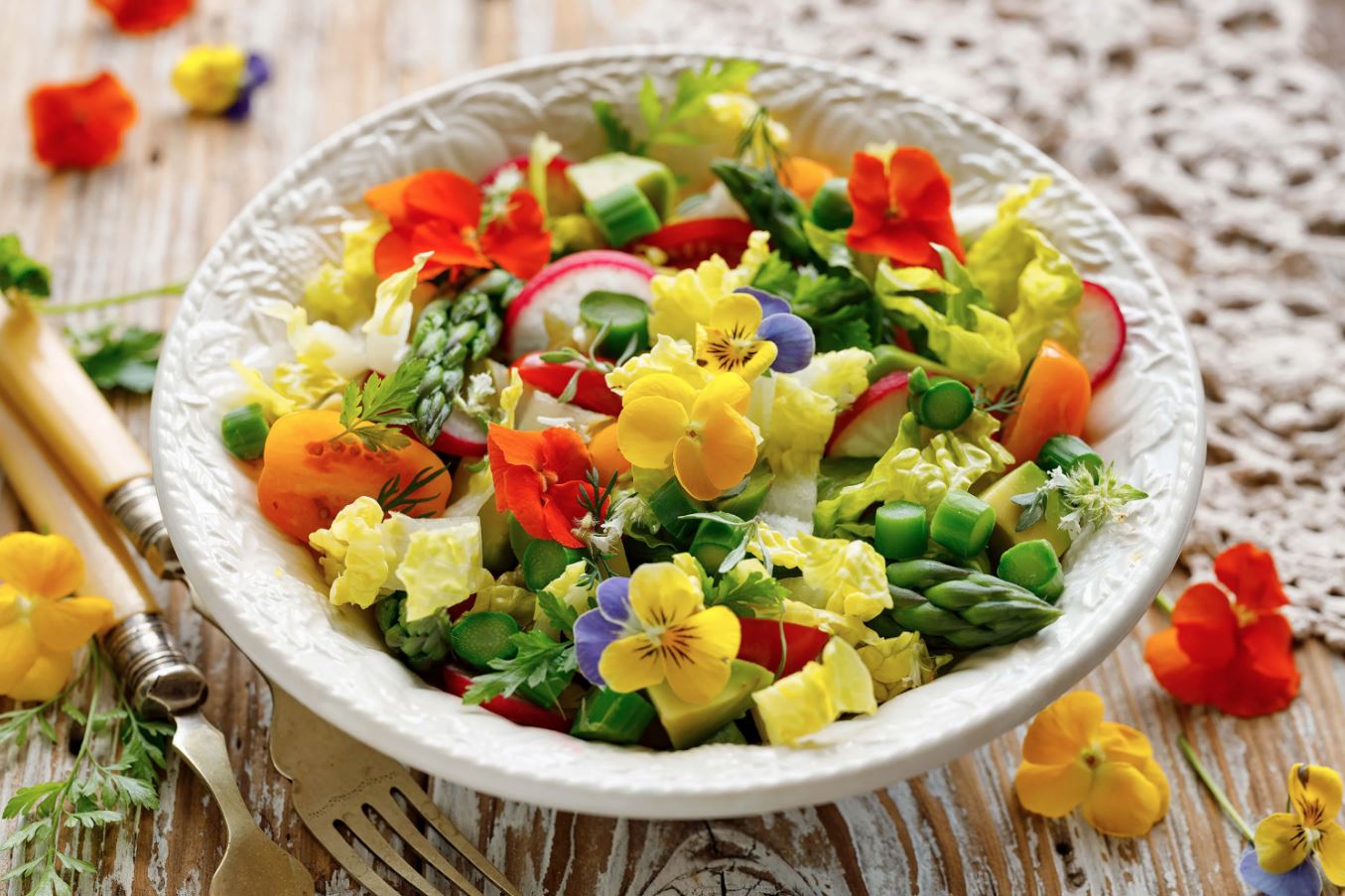
Cooking with flowers requires a delicate balance of flavor and form. They are best used to enhance rather than dominate. Pairing begins with understanding their essence. Sweet flowers like violets, roses, and lavender pair naturally with desserts, fruit, and honey. Peppery varieties such as nasturtium or arugula blossoms complement cheeses, salads, and meats. Citrus blooms like orange or lemon flowers work beautifully in pastries and beverages, while earthy petals like marigold or calendula balance grain-based dishes and soups. The key lies in restraint. A few petals can transform a dish, but too many can overwhelm the senses.
Color also plays a vital role in pairing. Deep-hued petals like pansies and cornflowers create contrast on creamy desserts or pale soups, while pastel tones harmonize with light salads and confections. Texture should not be ignored either. Thick, fleshy petals, such as hibiscus, can withstand heat and infusion, while delicate ones like elderflower are best used raw or in gentle syrups. The best way to learn pairing is through experimentation. Taste flowers raw before cooking, understand their profiles, and imagine how they might complement or contrast with existing flavors. The journey of discovery is as rewarding as the dish itself.
Techniques for Transforming Blooms
Flowers can be used in countless ways, limited only by creativity. The simplest method is raw garnishing. Fresh petals scattered over salads, desserts, or beverages add instant color and aroma. More intricate methods include infusing, crystallizing, and candying. Infusing involves steeping flowers in liquid, such as cream, syrup, or oil, to extract their fragrance. This technique works beautifully for ice creams, panna cotta, and dressings. Crystallizing requires brushing petals with egg white and dusting them with sugar, creating jeweled decorations that last for days. Candying, an older process, preserves petals in syrup or honey, concentrating their flavor and sweetness.
For savory applications, flowers can be incorporated into compound butters, marinades, and vinegars. Chive blossoms steeped in white vinegar yield a rosy-hued condiment with a subtle onion note. Calendula petals mixed into butter lend both color and a faintly peppery taste. Hibiscus flowers can be simmered into a tangy reduction for glazes or beverages. Drying flowers extends their use further. Dried rose petals can flavor spice blends, while lavender buds can be ground into sugar. Each technique reveals a new dimension of floral cuisine, merging preservation with creativity.
Regional Inspirations Around the World
The global tapestry of flower-based cuisine is as diverse as the flowers themselves. In France, the art of using flowers finds its pinnacle in Provence, where lavender flavors honey, ice cream, and pastries. The delicate flavor of violets defines the traditional candied treats of Toulouse. Italy embraces zucchini blossoms, filling them with ricotta and frying them to golden perfection. In Spain, saffron, derived from the crocus flower, remains a treasure that colors and perfumes paella and stews. In the Middle East, rosewater and orange blossom water flavor everything from baklava to tea, connecting the floral to the divine.
Asia has long cherished the use of edible flowers. In Japan, cherry blossoms symbolize spring’s fleeting beauty and are pickled to adorn rice and sweets. In Thailand, butterfly pea flowers create vivid blue drinks and rice desserts, their color shifting with the addition of citrus. India uses hibiscus in chutneys and religious offerings, while jasmine blossoms perfume milk and sweets. Latin America celebrates flor de calabaza, or squash blossoms, in soups and quesadillas. Each region tells its own floral story, bound by the shared appreciation of nature’s edible artistry.
Health and Well-being in Every Petal
Beyond beauty and flavor, edible flowers bring nutritional and therapeutic benefits. Many are rich in antioxidants, vitamins, and essential oils. Calendula and hibiscus, for instance, are known for their anti-inflammatory and detoxifying properties. Chamomile calms the mind and aids digestion, while lavender reduces stress and promotes restful sleep. Nasturtium offers natural antibiotic qualities, and rose petals are gentle tonics for the heart and skin. Eating flowers connects the act of nourishment to well-being, uniting culinary pleasure with holistic care.
However, understanding dosage and moderation is important. Flowers are potent, and their natural compounds can be strong. Always source from trusted growers who avoid pesticides and fertilizers. Avoid roadside flowers or those meant for decoration. The essence of floral cuisine lies in purity and mindfulness. To cook with flowers is to participate in a ritual of care, where the act of preparing food becomes a meditation on beauty, balance, and respect for nature.
Modern Creativity and Sustainable Expression
In modern gastronomy, edible flowers have become symbols of sustainability and artistry. They encourage seasonal awareness, as most varieties bloom only for a short time each year. Chefs cultivate their own gardens, ensuring freshness and reducing waste. Some experiment with hydroponic systems or wild foraging, expanding the range of accessible species. The aesthetics of plating have evolved alongside these trends, with flowers offering natural color without artificial additives. Their use bridges fine dining and home cooking, proving that elegance need not come from excess but from intention.
In the plant-based culinary movement, flowers provide complexity and excitement. Their flavors add dimension to vegan dishes, replacing the richness of butter or cream with perfume and texture. Mixologists have also embraced them, creating cocktails infused with elderflower, rose, or hibiscus. Even bakers find inspiration in pressed flower cookies and edible floral prints. The resurgence of floral cuisine is not nostalgia, but renewal. It reconnects the diner with the garden, turning every meal into an experience of wonder and gratitude.
The Poetry of the Blooming Table
Cooking with edible flowers is not about novelty. It is about rediscovering the quiet dialogue between nature and cuisine. A petal placed on a plate carries more than flavor. It carries the memory of morning dew, sunlight, and soil. It bridges the sensual and the spiritual, inviting us to see food not merely as sustenance but as art and connection. The act of eating flowers reminds us to slow down, to savor both color and fragrance, and to find beauty in the transient. In every petal that graces the table, there is a reminder that cooking is not only craft but celebration, and that nature, in all its delicate abundance, remains our greatest teacher.